Zestfloor MES: Your Smart Factory Starts Here
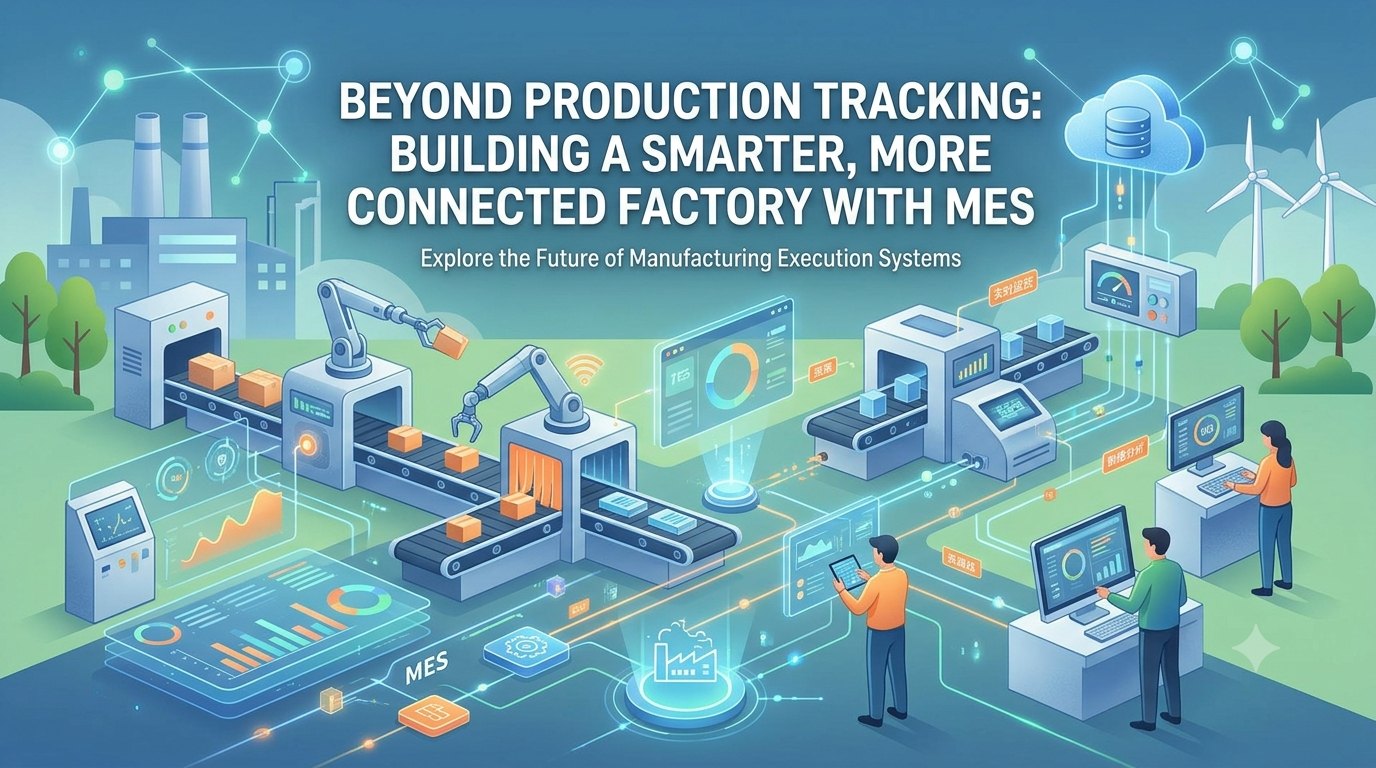
How manufacturers can transform shop-floor operations through real-time visibility, traceability, and data-driven decision-making.
Introduction: The Manufacturing Floor Is Changing
Manufacturing today is about more than meeting production targets. Businesses must deliver consistent quality, improve productivity, reduce downtime, maintain complete traceability, and respond quickly to changing customer demands. Yet, many manufacturing facilities continue to operate with disconnected systems, manual data collection, spreadsheets, paper-based records, and limited visibility into actual shop-floor performance.
Production data may exist, but it is often scattered across machines, departments, and applications. Managers may know how much was produced at the end of a shift, but understanding why production targets were missed can take considerably longer.
This creates a critical gap between what is happening on the shop floor and what decision-makers can see.
The future of manufacturing belongs to factories that can turn shop-floor data into actionable intelligence.
This is where a Manufacturing Execution System (MES) becomes essential.
1. The Hidden Challenges of Traditional Manufacturing
a. Limited Real-Time Production Visibility
Production teams need to know whether machines are running, whether orders are progressing as planned, and whether output is meeting targets. When production updates depend on manual entries or periodic reports, the information available to managers may already be outdated. This delay makes it difficult to identify bottlenecks, respond to unexpected stoppages, and take corrective action before production performance is affected.
b. Downtime Without Clear Answers
A machine stops. Production slows down. The team records the issue or sometimes records it later. But what caused the downtime? Was it a material shortage, a machine fault, a tooling issue, a changeover, or an operational delay?
Without accurate, timely downtime information, manufacturers may struggle to identify recurring problems and prioritize improvement initiatives.
c. Traceability That Takes Too Long
In electronics, automotive, engineering, and other manufacturing environments, traceability is essential for quality assurance and customer compliance. Manufacturers may need to identify which raw materials were used, which production orders consumed them, which machines and process parameters were involved, and which finished products were affected. When these records are maintained across disconnected systems, tracing a component or product can become a time-consuming exercise.
d. Quality Issues Identified Too Late
Detecting a defect at the end of production can result in rework, scrap, delayed shipments, and additional costs. Without timely visibility into inspection results, process parameters, and quality deviations, teams may miss opportunities to intervene before defects spread across a production batch.
e. Production and Business Systems Operating in Silos
ERP systems manage important business transactions, while machines and shop-floor applications generate operational data. When these systems are not effectively connected, production teams may lack the context needed to make informed decisions. The result is a gap between business planning and execution.
2. What is Manufacturing Execution System?
A Manufacturing Execution System bridges the gap between production planning and actual shop-floor execution. MES helps manufacturers monitor, manage, and record production activities as they happen, providing greater visibility into manufacturing operations. Depending on its configuration and integrations, MES can support:
- Production planning and order execution
- Work-order tracking and production reporting
- Machine and process monitoring
- Overall Equipment Effectiveness (OEE)
- Quality inspection and process control
- Material consumption and genealogy
- Work-in-progress visibility
- Operator guidance and activity recording
- Production traceability
- Machine integration
- ERP integration
By connecting production activities with operational data, MES helps manufacturers move from retrospective reporting towards more timely, evidence-based decisions.
3. Zestfloor MES: Connecting Planning with Shop-Floor Execution

Zestfloor MES by Intelizest is designed to support the digital transformation of manufacturing operations by connecting production processes, operational information, and shop-floor activities. Rather than treating production, quality, material movement, and machine data as isolated activities, Zestfloor helps bring these elements into a more connected operational environment.
- Real-Time Production Visibility - Gain better visibility into production progress, output, work orders, and shop-floor performance. When production information is captured and presented in a timely manner, it helps identify deviations earlier and make more informed operational decisions.
- Machine Integration and Performance Monitoring - Manufacturing equipment can generate valuable information about production cycles, operating conditions, and performance. Through suitable machine connectivity and data integration, Zestfloor can help bring machine-level information into the manufacturing execution environment. This creates opportunities to monitor performance, understand downtime patterns, and improve the use of production assets.
- End-to-End Traceability - Traceability should not stop at recording the finished product. Manufacturers need the ability to connect material consumption, production orders, process steps, inspection results, and finished-product records. Zestfloor supports manufacturing traceability by helping connect relevant production and quality information, subject to the configured workflows and integrations.
- Quality Management and Process Control - Quality needs to be embedded into production rather than treated only as a final inspection activity. Digital quality workflows can help standardize inspections, record results, identify deviations, and maintain relevant quality records. Combined with process monitoring, this can help teams identify recurring issues and strengthen process consistency.
- Production and ERP Integration - Effective digital manufacturing requires coordination between business systems and shop-floor execution. Through integration with ERP and other enterprise applications, Zestfloor can help align production orders, material information, and execution records, reducing dependence on disconnected information sources.
4. OEE: Understanding More Than a Percentage
Overall Equipment Effectiveness is widely used to understand how effectively manufacturing equipment is being utilized. OEE combines three factors: Availability × Performance × Quality
However, calculating OEE is only the beginning - Consider a machine reporting an OEE of 78%. The number indicates an opportunity for improvement, but it does not explain the underlying causes - Was availability affected by frequent stoppages? Was the machine running below its expected cycle time? Were quality losses reducing good output?
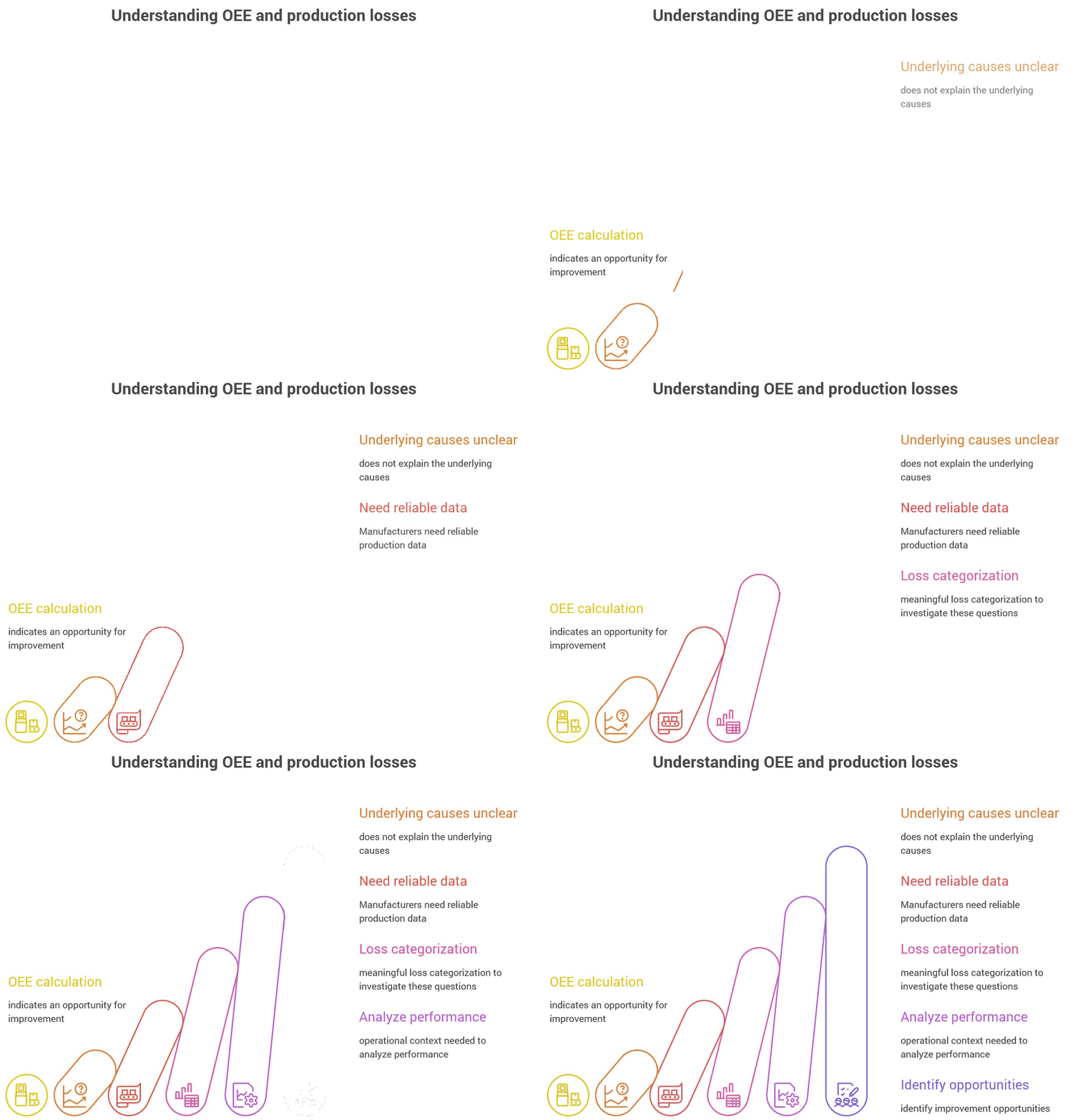
Manufacturers need reliable production data and meaningful loss categorization to investigate these questions. With appropriate machine integration and production records, Zestfloor can help provide the operational context needed to analyze performance and identify improvement opportunities. The objective is not simply to display a dashboard - It is to help understand what is affecting production and where corrective action may deliver the greatest benefit.
5. From Reactive Management to Proactive Improvement
In a reactive manufacturing environment, teams often respond after a problem has already affected output.
A proactive environment provides earlier visibility into deviations and gives teams the information required to investigate and respond. A connected MES can help support this shift through:
- Timely visibility into production deviations
- Structured downtime recording
- Monitoring of production targets and actual output
- Digital capture of quality results
- Traceability across production stages
- Historical data for root-cause analysis
- Performance dashboards for operational reviews
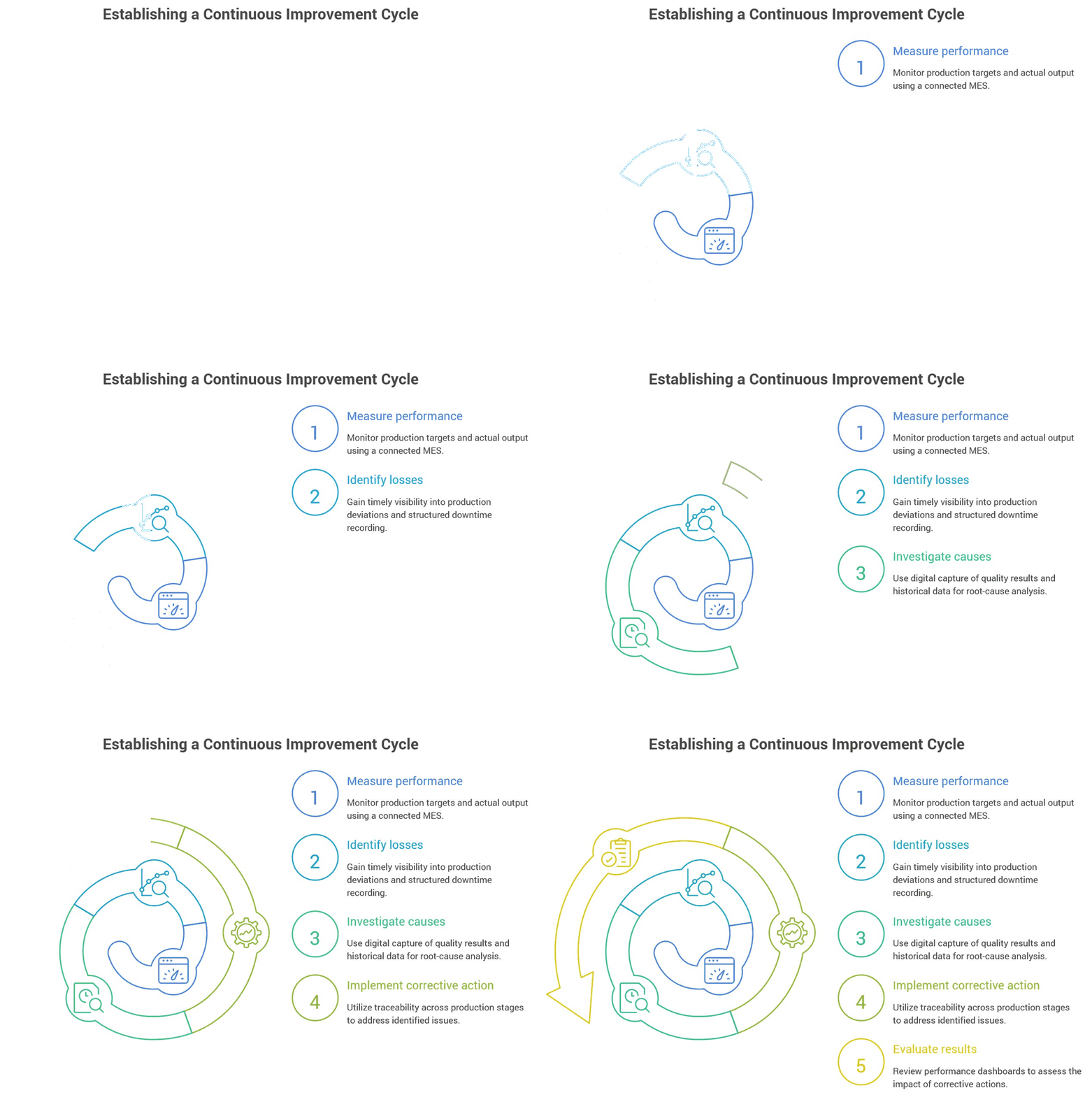
These capabilities can help manufacturing teams establish a continuous improvement cycle: measure performance, identify losses, investigate causes, implement corrective action, and evaluate results. Actual benefits depend on the quality of source data, system configuration, integration coverage, and how consistently teams use the system.
6. Why MES Matters for Electronics and Discrete Manufacturing
Electronics manufacturing and other discrete manufacturing environments involve multiple production stages, component variations, process dependencies, and quality checkpoints. A product may pass through several operations before becoming a finished assembly. Each stage can generate information that matters to downstream quality and traceability. Manufacturers may need to track:

- Material and component consumption
- Work orders and production batches
- Machine and process information
- Inspection and test results
- Rework and defect records
- Work-in-progress status
- Finished-product genealogy
When this information is connected, manufacturers can improve visibility into the production journey and investigate quality or delivery issues more efficiently. Zestfloor can support these objectives through configurable manufacturing workflows and integration with relevant shop-floor systems.
7. The Business Value of Digital Manufacturing
A well-implemented MES is not merely an IT deployment. It is an operational improvement initiative. By improving the availability and consistency of production information, manufacturers can work towards measurable business outcomes such as:
- Better production visibility
- Improved identification of downtime losses
- More consistent quality records
- Faster traceability investigations
- Reduced manual reporting effort
- Improved coordination between production and planning
- Better-informed continuous improvement initiatives
To measure these outcomes, organizations should establish baseline metrics before implementation and track changes after go-live. Relevant KPIs may include OEE, first-pass yield, schedule adherence, downtime, scrap rate, traceability response time, and manual reporting effort. The most valuable results come when technology is combined with standardized processes, engaged teams, and a clear improvement roadmap.
Conclusion: Build a Factory That Understands Its Own Performance
Manufacturing excellence requires more than machines, production plans, and periodic reports. It requires timely information, connected processes, reliable traceability, and the ability to understand what is happening across the shop floor.
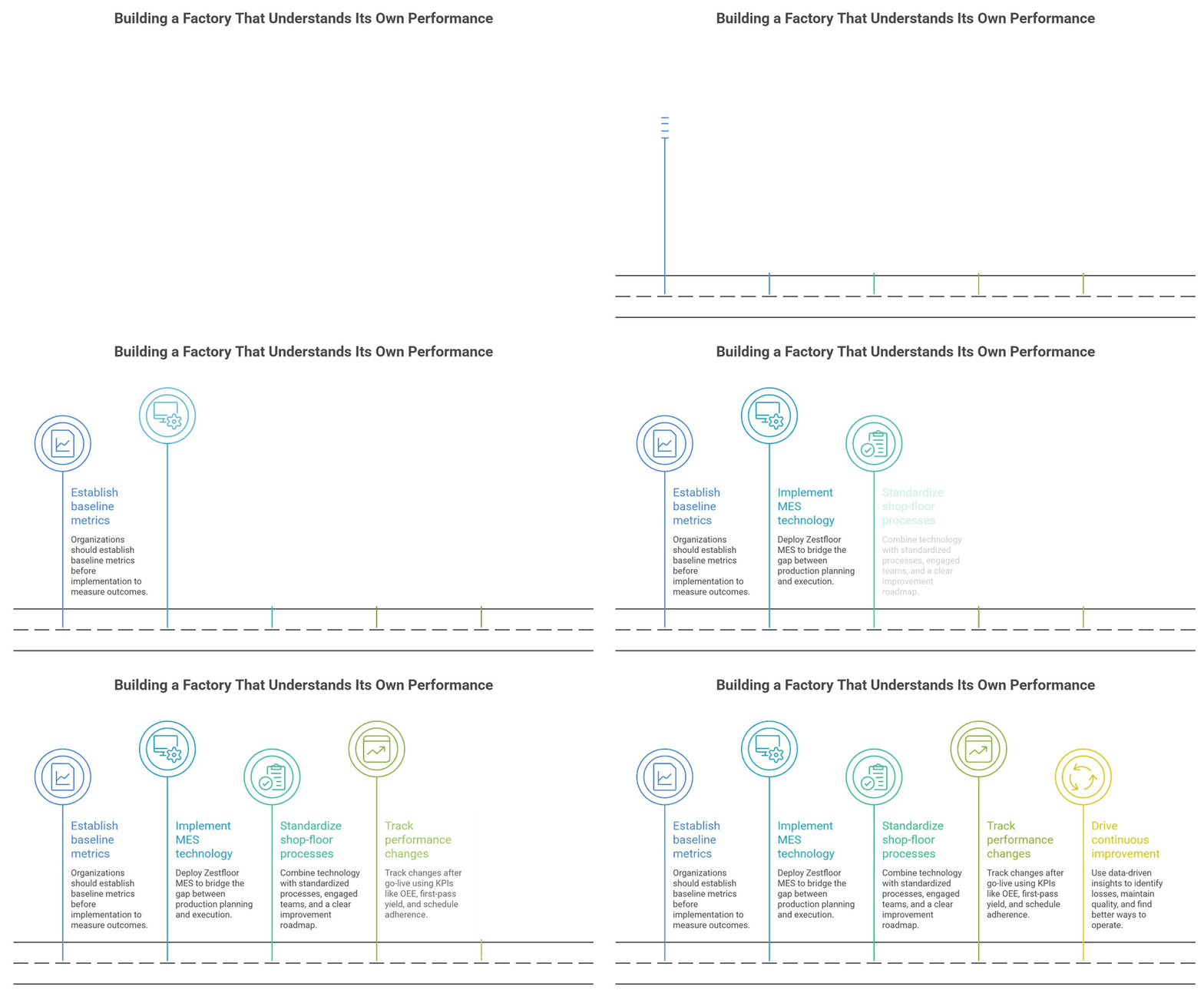
A Manufacturing Execution System helps bridge the gap between production planning and execution, giving manufacturing teams a stronger foundation for operational control and continuous improvement.
Zestfloor MES by Intelizest helps manufacturers take the next step towards connected, visible, and data-driven shop-floor operations.
Because a smarter factory is not simply one that produces more.
It is one that understands its performance, identifies its losses, maintains control over quality, and continuously finds better ways to operate.
Zestfloor MES — Your Smart Factory Starts Here.
Discover how Zestfloor MES can support your manufacturing digitalization journey with Intelizest.
Connect with our Sales Team for a DemoContact Us at sales@intelizest.com
To know more about us, visit https://intelizest.com/